An introduction to Equity Capital Markets
Introduction:
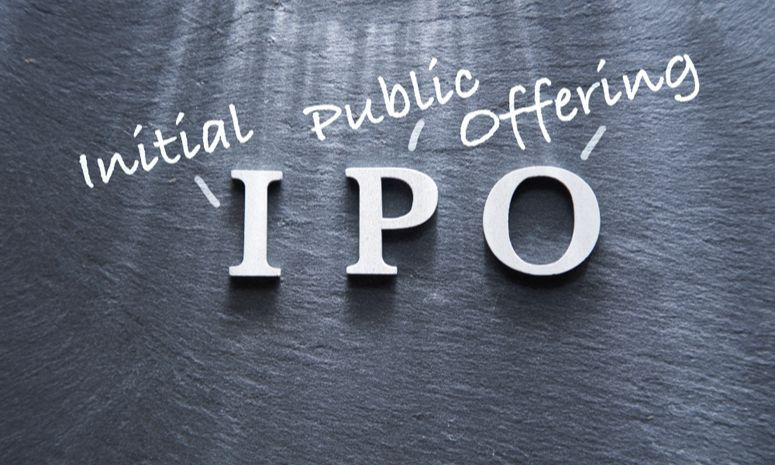
An IPO is an Initial Public Offering and is very simply the first time that a company’s stock is offered to the general public to buy. Companies use IPO’s to raise additional funds to help fund anything from growing their operations to paying off bonds.
Equity capital markets (ECM) are the equity markets that companies who file for an IPO will be listing. They also offer these companies opportunities to raise additional funds once the company has listed called a follow-on offering.
How does an IPO work?
The steps to an IPO vary slightly in each country due to different rules and regulations set by the appropriate authority. In the US this would be the Security and Exchange Commission (SEC).
Step 1 - for any company looking to go public is selecting an underwriter and/or an independent advisor. The role of an Underwriter is to serve as a ‘middleman’ between the company and investors looking to purchase the shares that will be offered. The underwriter is responsible for setting the initial price and also agreeing to take on the risk associated with the stock that has been earmarked for sale.
Step 2 – Next the underwriter, often an investment bank, will guide the company through the appropriate due diligence and regulatory filings. It is an important step on the road to going public and is key to obtaining investor confidence in the company’s integrity, current position and growth prospects. Investor confidence is vital in an IPO because without it investor’s will simply be unwilling to purchase any shares in the company.
Step 3 – Pricing the initial shares is dependant on the number of shares planning to be issued and the valuation of the company. Previous articles have touched upon valuation methods such as DCF’s and it would be recommended to understand those. It is important that the shares are priced accurately as a fall below the initial offering price would be less than ideal. Yet is it common practice to offer the shares slightly below their true value to ‘leave some on the table’ and encourage investors to buy into the company.
Step 4 – Stabilization – Once the company’s shares begin trading publicly it enters a period known as stabilization. During this period, the main aim is to ensure that the share price does not fall below the initial offering price. If this were to happen investors would be unwilling to buy any additional shares and the IPO would be unsuccessful. During this period underwriters can make use of a Greenshoe option or overallotment. The idea behind a Greenshoe option is that underwriters have the ability to issue 15% more shares than originally planned in order to raise more cash for the company and meet extra demand.
A Greenshoe option Example:
The underwriters agreed with Facebook to purchase 421 million shares at $38 per share. The underwriters sold 484 million shares to clients, approximately 15% above the initial allocation, creating a short position of 63 million shares.
If Facebook’s shares had traded above the $38 IPO price shortly after listing, the underwriting syndicate would have exercised the greenshoe option to buy the 63 million shares from Facebook at $38 to cover their short position and avoid having to repurchase the shares at a higher price in the market. However, because Facebook’s shares declined below the IPO price soon after it commenced trading, the underwriting syndicate covered their short position without exercising the greenshoe option at or around $38 to stabilize the price and defend it from steeper falls.
How do secondary offerings work?
Secondary offerings occur when a company is already trading publicly and has decided to raise more capital by issuing additional shares. There are a variety of different methods to a secondary offering, in the UK it is particularly common to raise capital through a rights issue where existing shareholders are issued the right to buy additional shares on a 1 for N basis, where N is existing shares. This method is beneficial for existing shareholders as if they exercise all their rights their ownership share is not diluted. There are other methods such as a private placing, where additional shares are sold privately to a selected group of investors, although this will dilute existing shareholders ownership.
Why raise capital through the Equity Capital Markets?
The pecking order theory states that companies should fund their operations firstly through any internal funds that the company may have (e.g retained earnings), then if this is not possible, they should look towards the Debt Capital Markets (DCM) and lastly firms may look to the Equity Capital Markets in order to raise capital. So, from this theory firms that do raise capital through the Equity markets would already have exhausted other options.
The need to raise capital will be driven by unique reasoning for different firm but often the capital raised from issuing Equity will be used to either pay bills, debts or other liabilities or to invest in the future growth of the company; this could be an investment in R&D or new technology.
IPO Example – Moonpig:
Moonpig are an example of a company that recently went public via an IPO. The online card producer raised a total of £539 million through the issue of 154 million shares at an issue price of 350p per share. The company had been valued at approximately £1.2bn. The underwriters consisting of Citi and J.P Morgan to name a few decided to exercise the greenshoe option and sold an additional 14 million shares. This resulted in Moonpig raising an additional £49. The overall IPO was a success and the shares finished trading at 421p a week later, an increase of 20 % on the issue price.
Conclusion:
An Initial Public Offering (IPO) is a simple concept to understand but nevertheless a vital one. It is the main method of a private company becoming publicly listed on a stock exchange, allowing its shares to be traded by the general public whilst simultaneously raising capital to fund the business. Recently, you may have noticed a boom In SPAC’s (Special Purpose Acquisition Company’s. This is another method of taking a company public and one that will be explored in another article.


Comments